July 15, 2026
Apple Price Increase 2026: Every Product That Went Up (Full List)
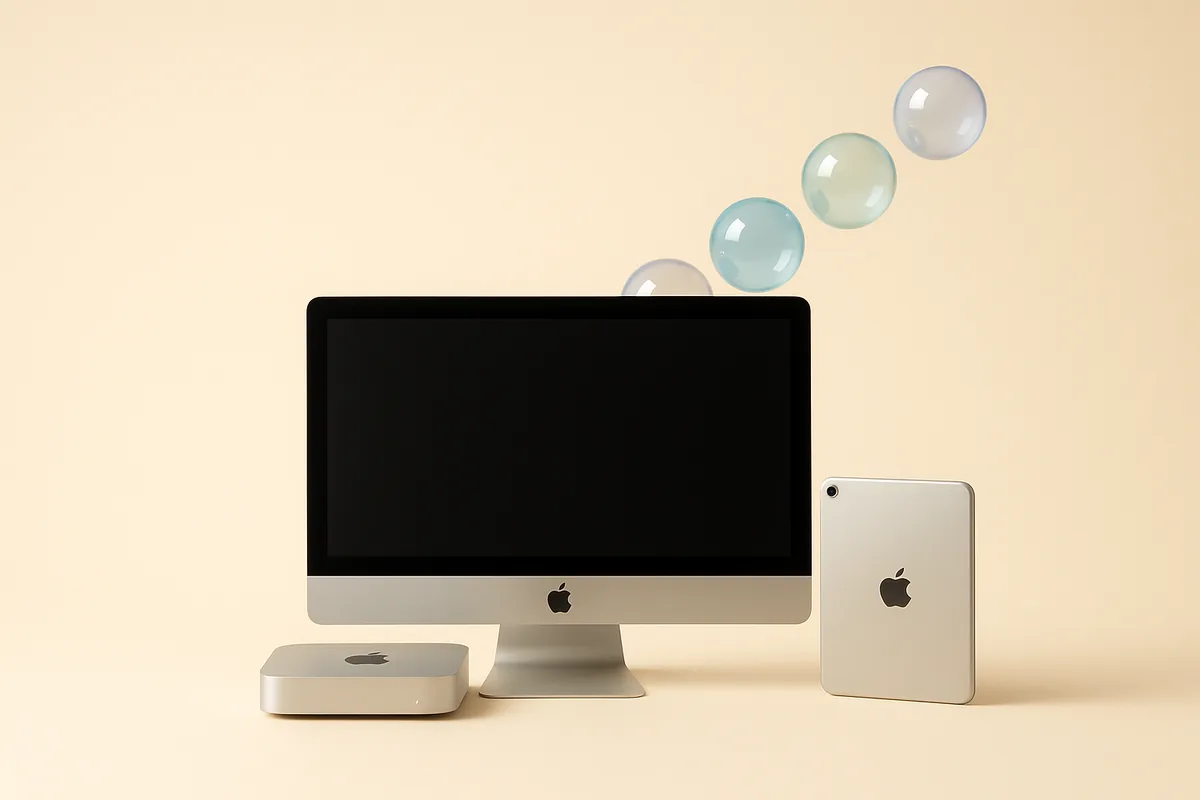
Every Apple Price Increase in June 2026: The Full List
These are the US starting prices before and after 25 June 2026. Note that Apple reintroduced a 256GB Mac mini configuration, so that comparison is like-for-like.| Product | Old price | New price | Increase | % |
|---|---|---|---|---|
| MacBook Neo | $599 | $699 | +$100 | +16.7% |
| MacBook Air | $1,099 | $1,299 | +$200 | +18.2% |
| MacBook Pro | $1,699 | $1,999 | +$300 | +17.7% |
| iMac | $1,299 | $1,499 | +$200 | +15.4% |
| Mac mini (M4) | $599 | $799 | +$200 | +33.4% |
| Mac mini (M4 Pro) | $1,399 | $1,599 | +$200 | +14.3% |
| Mac Studio (M4 Max) | $1,999 | $2,499 | +$500 | +25.0% |
| Mac Studio (M3 Ultra) | $3,999 | $5,299 | +$1,300 | +32.5% |
| iPad | $349 | $449 | +$100 | +28.7% |
| iPad mini | $499 | $599 | +$100 | +20.0% |
| iPad Air | $599 | $749 | +$150 | +25.0% |
| iPad Pro | $999 | $1,199 | +$200 | +20.0% |
| HomePod mini | $99 | $129 | +$30 | +30.3% |
| HomePod | $299 | $349 | +$50 | +16.7% |
| Apple TV 4K (Wi-Fi) | $129 | $199 | +$70 | +54.3% |
| Apple TV 4K (Wi-Fi + Ethernet) | $149 | $249 | +$100 | +67.1% |
| Vision Pro | $3,499 | $3,699 | +$200 | +5.7% |
Apple's refurbished store went up on the same day
This is the detail most coverage missed, and it matters if you were planning to dodge the increase. Apple raised refurbished Mac and iPad prices on 25 June too, by roughly $160–180 on average. A refurbished 14-inch MacBook Pro M4 Pro went from $1,699 to $1,779; a refurbished iPad mini 6 went from $379 to $459. That is revealing. Refurbished units were built with memory bought before the price spike. Their cost to Apple did not change. Raising their prices anyway suggests this is Apple resetting its price structure, not purely passing through a cost it just incurred.Why Did Apple Raise Prices? The Official Reason
Apple issued a statement to press on 25 June 2026. It was an unattributed company statement — not a quote from any named executive:"The consumer electronics industry is facing an unprecedented challenge. The rapid expansion of AI data centers has created an extraordinary surge in demand for memory and storage. We have never seen a component price increase this much, this quickly. We have shielded our customers from these increases so far, but we have now reached a point where we need to begin raising prices on a number of products, including today's increases for iPad and Mac. We know this is not welcome news, and we are working tirelessly to find solutions."Two words in that statement carry weight. Apple says it needs to "begin" raising prices — which implies more to come. And it says it is "working tirelessly to find solutions" — which implies the increases are not intended to be permanent. Apple committed to neither reading; both are inferences. Eight days earlier, on 17 June 2026, Tim Cook had already told The Wall Street Journal that increases were coming:
"Unfortunately, price increases are unavoidable. We're doing our best to mitigate the huge increases that are being passed to us, and we've been trying to shield our customers from the increases, but the situation has become unsustainable."Cook described the situation as a "100-year flood" and said he had never seen anything like it in over 40 years. On Apple's Q2 FY2026 earnings call on 30 April 2026, he had flagged it in advance: "For the June quarter… we expect significantly higher memory costs," adding that "beyond the June quarter, we believe memory costs will drive an increasing impact on our business."
The Memory Shortage Explained: Why AI Made Your iPad More Expensive
The mechanism is genuinely counterintuitive, so it is worth understanding properly rather than accepting "AI did it." Nvidia's AI accelerators use HBM (high-bandwidth memory), a stacked, specialised form of DRAM. HBM is made on the same wafers, in the same fabs, as the ordinary DRAM in your Mac and iPad. There is no separate factory. Here is the crowding-out effect, using TrendForce's supply data for the top three memory makers:| Measure | End 2025 | End 2026 | End 2027 |
|---|---|---|---|
| HBM share of DRAM wafer input | ~18% | ~22% | ~30% |
| HBM share of DRAM bit output | ~8% | ~9% | ~13% |
What actually happened to memory prices
| Quarter | Conventional DRAM | NAND Flash |
|---|---|---|
| Q1 2026 (actual) | +93–98% | — |
| Q2 2026 (forecast) | +58–63% | +70–75% |
| Q3 2026 (forecast) | +13–18% | +10–15% |
Which Apple Products Did NOT Go Up?
As of today, iPhone, Apple Watch, AirPods and the Studio Display are unchanged. That is not a promise. Asked directly which products would rise and when, Cook said only: "We're still working through that." Most analysts expect the September iPhone launch to be the next pricing event. We cover the evidence and the full range of analyst predictions in our companion guide: Will the iPhone 18 Pro Cost More? 2026 Price Predictions.Apple Was Late, Not Early: The Industry-Wide Picture
It is easy to read this as an Apple story. It is not. Apple was one of the last major manufacturers to move — Dell raised PC prices six months earlier, in December 2025.| Company | Product | Change | When |
|---|---|---|---|
| Dell | PCs | +15–20% | Dec 2025 (first mover) |
| Lenovo | PCs | Unspecified | Jan 2026 |
| Raspberry Pi | 8GB / 16GB boards | +$30 / +$60 | Feb 2026 |
| Samsung | Galaxy S26 / S26+ | +$100 each | Mar 2026 |
| Sony | PS5 / PS5 Pro | +$100 / +$150 | Apr 2026 |
| Valve | Steam Deck OLED 1TB | +$300 | May 2026 |
| Apple | Macs, iPads, TV, HomePod, Vision Pro | +$30 to +$1,300 | 25 Jun 2026 |
| Microsoft | Xbox Series X / S | +$150 / +$100 | Announced 25 Jun 2026 |
| Nintendo | Switch 2 | +$50 | 1 Sep 2026 |
Will Apple Prices Come Back Down?
Honest answer: probably not soon, and probably not fully. Here is the evidence on both sides. Arguments that prices stay high: Micron — the supplier, not a commentator — says it expects tight conditions to persist "beyond calendar 2027" and admits it does "not have line of sight as to when memory supply will be able to catch up with increasing demand." New fabs take years; Micron's Idaho ID1 plant produces first wafers in mid-2027, ID2 in late 2028. Jefferies sees recovery only by 2028, with relief "likely to be limited." Arguments that the peak has passed: the rate of increase is collapsing (98% → 63% → 18%). More tellingly, Micron capped its own largest supply agreements at the Q2 2026 market price — roughly 40% of its revenue is now fixed at or near that ceiling. A supplier does not cap its own upside unless it believes the top is in. Asus, meanwhile, says its next increase will be "single digits." Apple's own position is conditional, not a promise: Cook has argued that memory pricing needs to come back down to earth before Apple's prices could follow. Notably, Apple has asked the US administration to approve purchases of Chinese RAM — the most concrete public evidence of what "working tirelessly to find solutions" actually means. One important nuance: the price rise is not the same as the cost rise. Morgan Stanley's read is that the scale of Apple's increases shows the company is defending gross margins, not merely offsetting inflation. Apple's product gross margin fell 200 basis points sequentially in Q2 FY2026 — real pressure, but the retail increases went further than a pure pass-through would require.What This Means If You're Buying Apple in 2026
The workarounds people reach for first mostly do not work:- Buying old stock from retailers. This window lasted roughly 24 hours. Amazon held old pricing through the tail of Prime Day and then matched. It is closed.
- Refurbished. Apple raised refurbished prices the same day, by $160–180 on average.
- Waiting for the next model. New models are built with more expensive memory, not less. Waiting does not obviously help.
- Education pricing. The discount percentage survives, but it now applies to a higher base price.
Where AppleCryptos sits
We sell genuine, sealed, warrantied Apple products and we price independently of Apple's store. On several lines that gap is now substantial:| Product | Apple's price today | Our price | You save |
|---|---|---|---|
| HomePod (2nd gen) | $349 | $259 | $90 |
| HomePod mini | $129 | $89 | $40 |
| iPhone 17 | $799 | $699 | $100 |
| iPhone 17 Pro | $1,099 | $899 | $200 |
| Vision Pro | $3,699 | $3,299 | $400 |
Frequently asked questions
When did Apple raise prices in 2026? On 25 June 2026. Apple briefly took its online store offline and relaunched it with new prices worldwide. There was no event or announcement — the company issued a statement to press the same day.
Why did Apple increase prices? A global memory shortage. AI data centre demand for HBM memory has consumed DRAM manufacturing capacity, pushing conventional DRAM contract prices up 93–98% in a single quarter. Apple's own long-term memory supply agreements expired during the quarter, exposing it to current market pricing.
How much did Apple prices go up? Between +$30 (HomePod mini) and +$1,300 (Mac Studio M3 Ultra). Most base models rose 15–20%. The largest percentage increase on a base model was the Apple TV 4K at +54%.
Did iPhone prices go up? No. iPhone, Apple Watch, AirPods and the Studio Display were not affected on 25 June 2026. Tim Cook declined to say whether iPhone prices would rise, saying only "We're still working through that." Most analysts expect clarity at the September 2026 launch.
Will Apple prices go back down? Apple has not promised this. Micron expects memory to remain tight beyond 2027 and says it has no visibility on when supply catches up. The rate of memory price increases is slowing sharply, but prices are still rising — no forecaster currently predicts a fall.
Is buying refurbished a way to avoid the increase? Not from Apple. Apple raised its refurbished Mac and iPad prices on the same day, by roughly $160–180 on average.
Which Apple product had the biggest price increase? In dollars, the Mac Studio M3 Ultra: $3,999 to $5,299, an increase of $1,300. In percentage terms on a base model, the Apple TV 4K: $129 to $199, up 54%.
Can I still buy Apple products at pre-increase prices? Not from Apple, and mainstream retailers matched within about a day. Independent retailers that priced stock before the reset may still be lower — AppleCryptos currently sells the HomePod at $259 against Apple's $349, and the iPhone 17 Pro at $899 against Apple's $1,099, payable in Bitcoin and 50+ other cryptocurrencies.
By Alex Carter, Apple & Crypto Analyst at AppleCryptosReady to buy Apple with crypto?
Shop genuine, sealed Apple products and pay privately with Bitcoin, USDT and 20+ coins.
Browse products